
Advertising
Click to WhatsApp ads: 300 clicks, 7 paid orders
The ad generates opens.
The sales team sees scattered “Hi” messages, and the month ends without agreement on what the campaign earned.
Track which people sent a real message, which conversations could be served and which orders were paid.
ClassMaster · Updated
What is the gap between opening WhatsApp and sending a message?
Meta click-to-WhatsApp ads send the customer to a message entry. The visitor still chooses whether to start a conversation.
If the ad promises a quote for a specific product but the screen opens on a generic greeting, the buyer often has to figure
out how to ask again.
Choose a first message that tells the customer what will happen next.
For example a custom window business can ask which ZIP code or type of room is relevant.
Carry the ad's product or promise into the question without asking the phone number WhatsApp just supplied.
Test the entry with a different employee before buying more traffic.
How do you tell whether the conversation is useful?
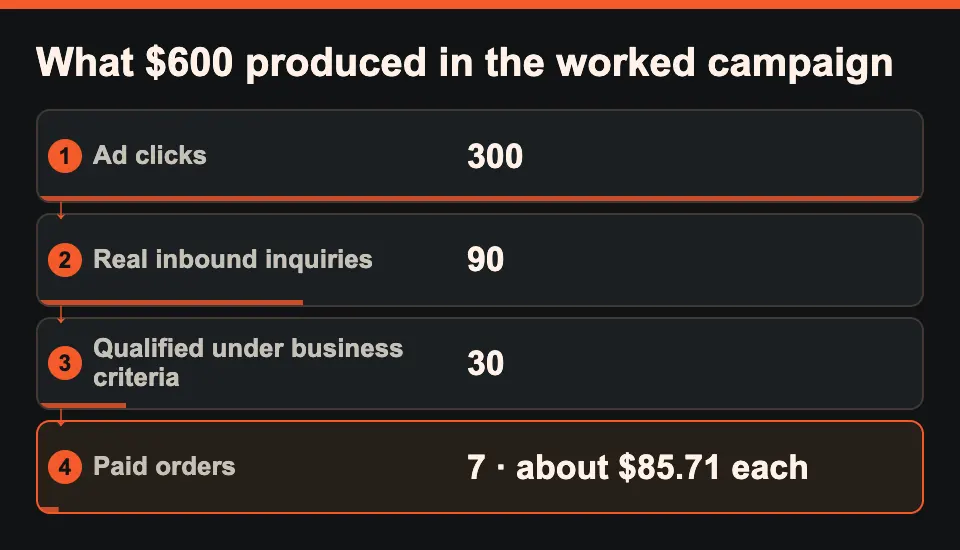
Suppose a hypothetical campaign records 300 clicks, 90 real inbound inquiries, 30 that match business conditions and seven
paid orders.
Spend was $600. Cost per real inquiry is $6.67 and cost per qualified inquiry is $20.
Cost per paid order is about $85.71 before any later refunds.
Define qualified with the team that fulfills orders.
A furniture maker may need an item, an installation area and the buyer's desired date.
A customer still deciding on size can be potential work.
Record which piece is missing rather than treating every open conversation as a qualified lead.
- Source and time of first verifiable inquiry.
- Who owns the next unresolved step.
- Date and circumstances of a verified payment or other outcome.
Use the four-count worksheet
Compare clicks, genuine messages, qualified inquiries and paid orders from one campaign. Copy how each stage is defined.
Pick the widest gap and select three anonymized conversations to understand it.
What should the handoff retain when somebody returns later?
A person who got a Saturday pickup quote may return midweek to ask for shipping.
Preserve the relevant order, last price, new address and terms still to be confirmed.
If the shopper begins in a different browser or via organic search, label the source only when a reliable field or operational
record exists.
Give your CRM enough room to distinguish one returning customer from one extending order.
The next colleague can then open the right record.
This helps avoid a false count of new leads when the same buyer checks several products before choosing.
When does billing context matter?
The campaign's media spend is separate from the delivered-message bill.
Meta's current pricing rules describe a free entry point after an eligible mobile user message and timely reply.
Eligible messages can be free during that window for up to seven days; Meta Business Agent usage remains chargeable.
Check billing with the delivery record before using it in the budget.
The ads dashboard cannot tell you whether every customer satisfied the window's conditions.
Have marketing and customer support reconcile a few customer journeys, then compare software and staffing costs as independent
layers.
What change should you make first?
If people tap and rarely start a conversation, start with entry language, ad promise and expected action.
If people message but often cannot buy, inspect service coverage and first questions.
If qualified inquiries end without payment, see whether staff reply promptly and have a workable quote or schedule.
Choose one change and define what effect would justify keeping it. Retain what survived the first test.
If you made both a new offer and a new destination at once, it will be harder to explain the difference in your next spending
decision.
What can ClassMaster test with you?
Bring an anonymized campaign report and three incomplete inquiries.
ClassMaster can trace the route from ad to WhatsApp, the individual staff decision and the eventual CRM outcome.
We can use that to diagnose whether the next pilot should improve what people ask, how the team responds or the record that
connects both.
Catch the conversation source before it fades
Suppose a buyer starts with a promoted appointment and returns two days later to change the time.
The second reply may look like organic support to the person taking over.
Preserve the original campaign evidence and append the new status when the booking is confirmed.
Give a repeat customer a way to continue the same enquiry if they want the same appointment.
If two chats point to the same booking, count the order once.
Compare confirmed bookings with clicks that open chat and with messages actually received.
The gap between those figures tells you where to inspect first.
Follow an appointment past the initial WhatsApp thread
In a worked appointment example, a fitness studio advertises a small trial group and asks which class time people prefer.
A person opens WhatsApp, sends a question about the afternoon slot, then checks again two days later.
The person who takes over from the first employee should know which slot they asked about and whether the first answer
guaranteed it.
If the slot could fill, the second employee needs an availability check and a return time the studio can keep.
That handoff matters even when the ads dashboard reports a conversation at the first touch.
Use a test message that changes the original requirement.
It could ask for a second person to join or move from afternoon to evening.
The origin still matters, but the current promise changes. See whether the view used by the next employee retains both facts.
If the handoff opens a new thread, check how the order or booking record prevents the same appointment from being counted
twice.
Match staff coverage to the next campaign trial
Compare results for staffed and unstaffed hours.
A short automated response can acknowledge a request, explain when staff will confirm, and capture a booking preference.
A handoff succeeds when the buyer eventually receives the information they need, not simply the moment a reply is counted.
Link the earliest useful reply and the result to the same buyer case.
Keep uncertain cases out of the proof set until they can be checked.
Before opening a larger group, compare which hours your employees can cover and which inquiries become available seats.
A message asking for an unavailable class is still informative if it arrives repeatedly.
Use those requests to decide whether to change the advertised time, publish clearer availability, or include a waitlist that
staff will actually check.
Keep one opportunity record through any of those changes to make results comparable.
Sources · 2026-11-28 · Meta ads that click to WhatsApp · Meta WhatsApp pricing
Related guides
FAQ
Does a click count as a conversation?
The click opens the entry. Count real messages separately, and use an agreed rule for repeat requests.
Can I see exactly which ad earned a sale?
Sometimes the source and order can be joined reliably. Keep unknowns and multiple touchpoints visible instead of crediting every purchase automatically.
Should I automate the whole chat?
Start with questions that can safely be answered and a defined human handoff. Measure whether the next employee has enough to act.
Do click-to-message ads remove other costs?
Media spend, provider fees, staff time and message billing have separate rules. Check delivery eligibility in the actual billing data.
What should I bring to ClassMaster?
One campaign's spend, click and message counts, and examples of a paid and an unfinished inquiry. We can identify the first step worth testing.