
WhatsApp AI
WhatsApp chatbot for ecommerce: fit checks or shipping?
During a sale, buyers fill your inbox with questions about sizes and shipping.
Give a WhatsApp chatbot one of those jobs and current store data, then route unresolved questions to the team that can fix
them.
ClassMaster · Updated
Which task should a store automate first?
Pick the question customers repeat and staff can answer using one trusted system.
If your returns desk spends hours checking order progress, test delivery updates.
If shoppers regularly ask whether a compatible part fits their model, write the compatibility rule first.
These problems need different information and tests.
Imagine an online workshop-supply store that offers local pickup and UPS delivery.
Two products in the same picture take different replacement filters.
Ask which model the buyer owns, check documented compatibility, then see whether the item is available in their ZIP code or on
a shelf the staff can access.
How should a chatbot handle inventory that can change?
Decide which store inventory number it may use and how fresh it needs to be.
Display the available variant, fulfillment option and time checked when useful.
If the numbers come from overnight exports, ask staff to check low stock rather than tell the buyer it is guaranteed.
Test the situation when someone asks about a product that sold out between two messages.
If the bot offers a replacement, the next colleague should see both the original item and the substitute the buyer chose.
Avoid joining chats to a generic product when the size and color determine actual availability.
- Match product and variant.
- Confirm the requested pickup or shipping method.
- Leave a responsible employee when stock or promise needs verification.
Run a shoestring order test
Pick one product family and three anonymized chats. Mark which verified field each reply needs.
Ask a staff member to finish an exception using only the summary and the store system.
What does an order-status answer need?
Know which customer record can be used, and the minimum fields needed to look it up.
Give the answer the shopper needs without revealing unrelated order details.
The current carrier update, package status and next step are more useful than a long history of internal warehouse events.
Handle a partial shipment deliberately.
When one item is already delivered and another is awaiting dispatch, a single “shipped” state can mislead the buyer.
Give the current status for the item they asked about, and show what the colleague can verify if the expected date is unclear.
When should a person make the decision?
A template can explain a store's return policy.
Staff should assess whether a specific damaged item, certain payment question or an address change after shipment fits an
exception.
Ask the chatbot to carry the order, evidence, request and point of disagreement into one employee task.
If an item is due as a gift on a specified date, confirm which dates are carrier estimates before making a promise.
Establish what choices staff can offer.
A buyer who needs the parcel sooner has a decision to make, and should understand what the seller knows now.
What should the first week show?
Run the same five common questions before and after turning on a tested workflow.
Note repeats, answers that required a fresh lookup and exceptions without an owner.
Choose one measure that matters to the store, such as minutes per shipping inquiry or same-shift completion.
A rise in messages answered can hide a decline in useful outcomes. Measure how many customers reach the agreed next step.
If the chatbot answers faster but a colleague has to repeat product identification every time, fix the handoff before enabling
broader automation.
How do you start with ClassMaster?
Bring three anonymous scenarios from your checkout, delivery or returns desk.
State which answers are approved, which data can be used and who owns exceptions.
We can demonstrate the first process and suggest the information worth connecting before you alter the shop's whole workflow.
Test exceptions with the employee who has to resolve them
Choose a purchase that a first-time buyer can get wrong, such as a replacement part for an older model.
Try supplying two different model numbers in the same thread.
The handoff should carry the buyer’s last confirmed model and why it is still uncertain.
Ask the person who will receive the request to continue without seeing the test instructions.
If they ask the buyer to repeat a detail, change what gets transferred before adding new answers.
A bot that reduces browsing time but increases the chance of a returns call has moved work further down the purchase.
Compare one purchase question with one delivery question
A hiking retailer might get questions about fitting a replacement buckle and tracking a parcel from the same customer.
Compatibility depends on product facts and the dimensions on a label.
Shipping status depends on the closest available scan and an order that the buyer is entitled to see.
Split those tasks in the test.
Start with the one for which the store has the cleanest information and can recognize an exception.
If product data is reliable but shipping records are incomplete on weekends, the fit question may be the stronger first
project.
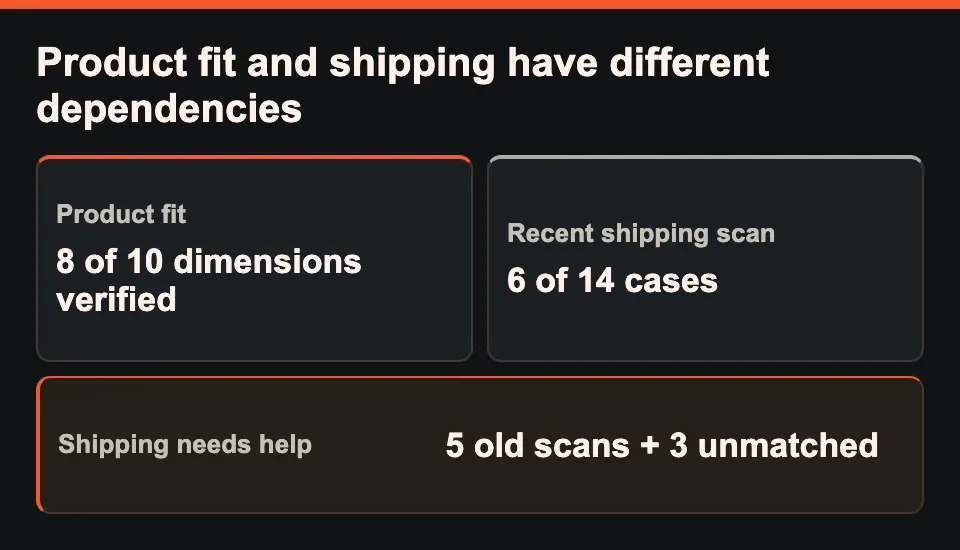
As an illustrative test, take 24 questions, 10 about product fit and 14 about shipping status.
Suppose the store can verify dimensions for eight of the 10 and gives a definite answer in those eight cases.
Among the 14 shipping questions, six have a recent carrier scan, five have an old scan, and three lack an order that can
safely be matched.
Those last eight shipping cases need either a careful update or a person.
The counts tell the store which task can begin with fewer dependencies.
Measure the work the bot might move to another team
Give test buyers a chance to ask why an item will not fit, why a parcel is late, and how to send something back.
If a fit recommendation goes wrong, record how many extra messages and minutes the returns desk spends correcting it.
If tracking information gets old, judge the next reply by whether it says what was actually checked and who owns the update.
The team may save time on a narrow flow while learning where product data or order identity needs work before a wider rollout.
Keep a few failed questions as regression checks whenever store policies change.
Choose at least one that previously seemed resolved but needed an employee later.
This gives staff a practical way to check whether the flow still helps after a new line of products arrives.
Sources · 2026-11-28 · Meta WhatsApp Business Platform · WhatsApp Business Messaging Policy
Related guides
FAQ
Can the chatbot read from Shopify or another order system?
An implementation may connect approved data if your store, access and tooling support it. Verify which fields are available and who can see them.
What if there is no live stock connection?
Use recorded information with a clear time or ask staff for a check for stock-sensitive requests. Test the reply when the record is missing.
Should we start with returns or shipping?
Choose the handoff you can test with real examples. A shipment status can often be verified with existing data; a refund decision can require human approval.
What's a useful rollout test?
Include two identical orders with different variants, a partial shipment and a delivery address change. Review the reply and the staff action.
What can we ask ClassMaster to look at?
Share one common store question and an exception. We can show what a reliable answer and handoff would need.